The three camps we currently visit, Ritsona, Oinofyta and Malakasa, are now firmly anchored in our weekly structure. It is nice to see that many already known women still come to us regularly but also some new women participate in our offers.
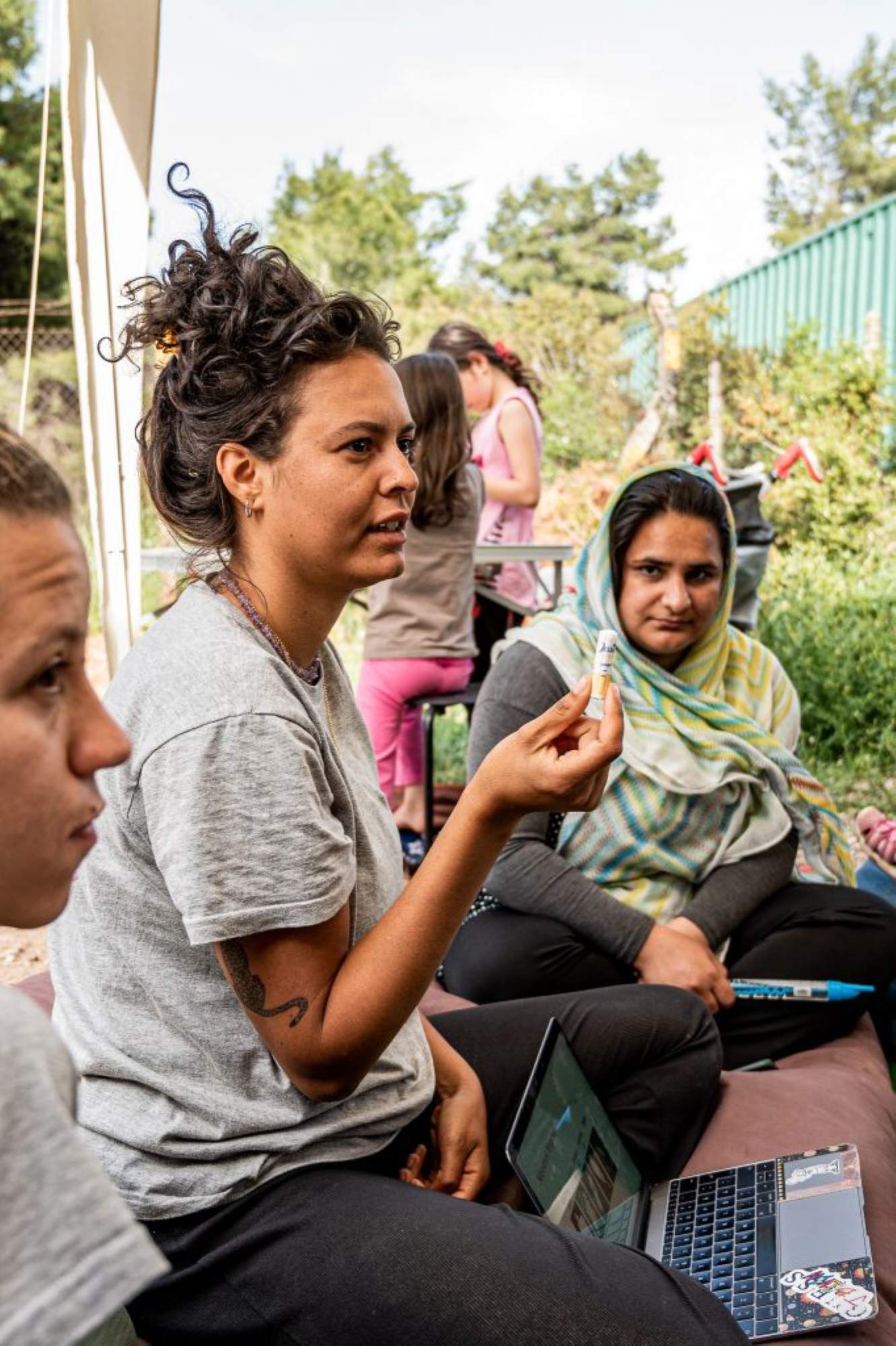
Nevertheless, we currently have to rethink a lot and continue to create new structures. The constant rotation in the crew, the rapid change from cold to heat and changes in the camps regularly present us with new challenges. We try to survive the temperature change with more shade, pavilions, wet cloths, quieter games and a lot of water. We have also shortened the sports workshops for the time being, first because of Ramadan (in April) and now because of heat (from May). At the same time, we try to offer more alternatives, such as painting with hands and feet, crafts and works with wood. There are still new topics for the discussion groups; as a last dental hygiene for adults and children. We also had to act flexibly in the few rainy days, as we cannot set up any offers outside under these circumstances. So the truck in these days became a cinema, a dance floor, or a music room with guitar and tambourin. In addition, a feminist library with literature in various languages for children, adolescents and adults is being put together for the new ROSA truck.
The different needs in the different camps are becoming more and more clear, and we try to adapt our offers to the corresponding camps.
The camp in Oinofyta presents us with the biggest hurdles in this regard, as the current place where we set up the safespace is directly on a highway. For a long time, only a few women and children came to our place, but we drew attention to our offer with posters in the camp and now more women are coming in Oinofyta. It will become clear whether we have to “repark” our safespace – But we definitely want to stay in Oinofyta, especially because there is less state support, fewer NGOs, no public connection to Athens and stricter camp management. The needs and needs of the people in Oinofyta are even more pressing and fundamental than in the other camps.
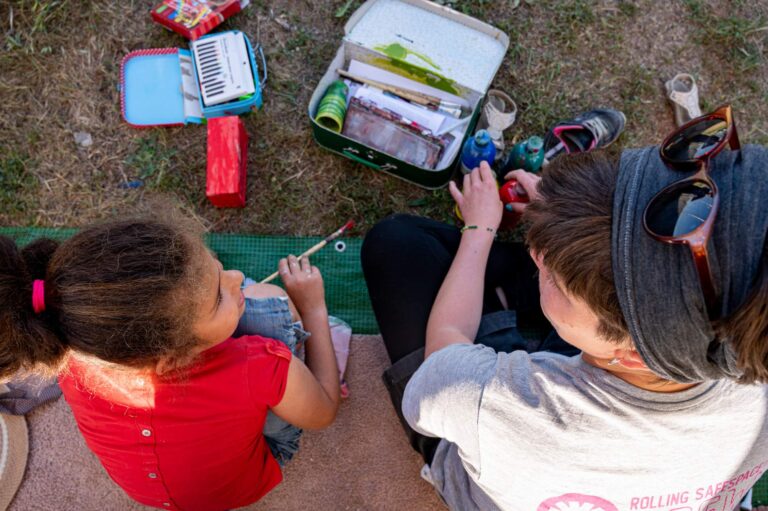
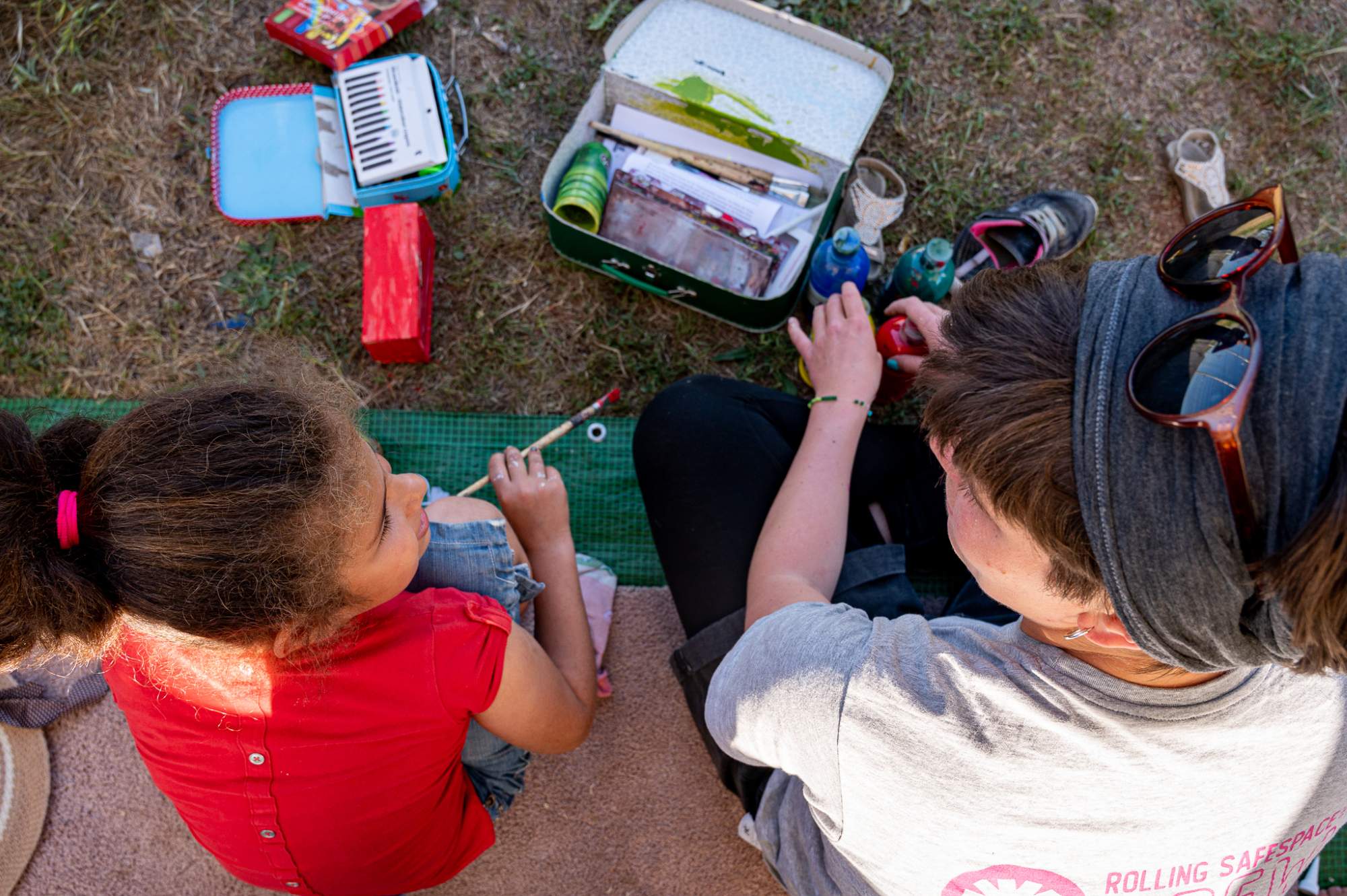
In Malakasa we now reach many more women than at the beginning, and the first pregnant women came to us in the Medi room. The teenagers in Malakasa have a lot of fun at the beauty and craft corner: Here you can find creative painting, nail polish, ornamental stones, hairdressing, and other craft offers, such as the joint construction of a wooden box.
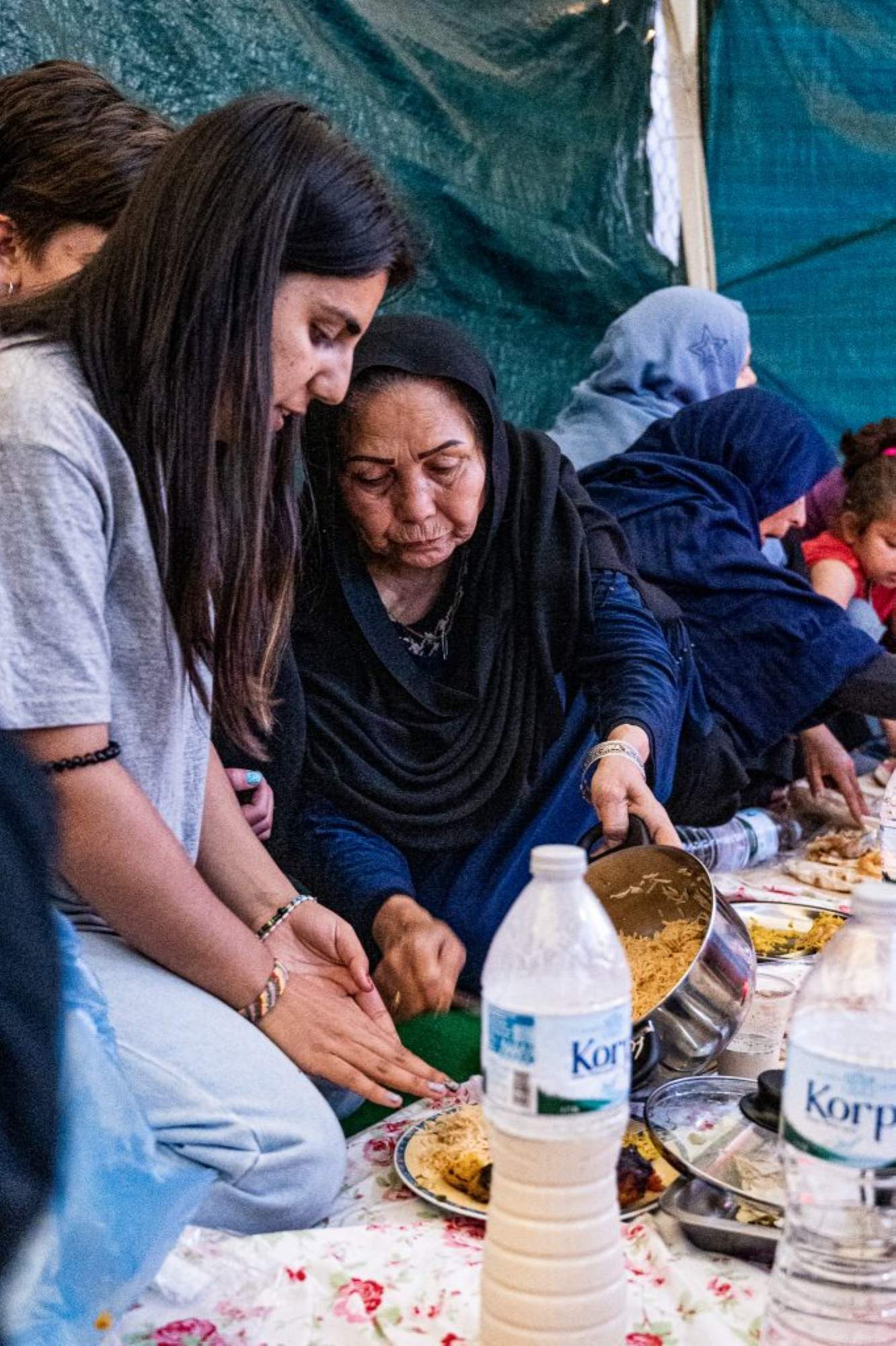
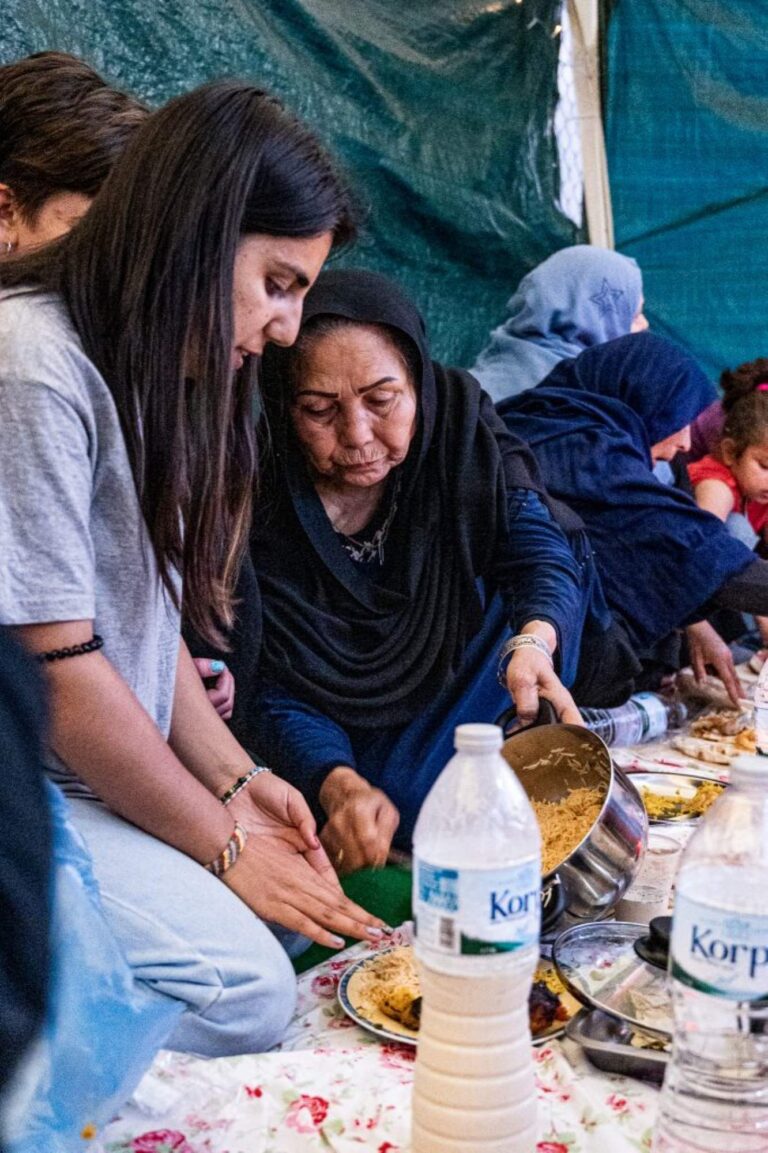
Particularly touching and exciting was the Iftar together – the breaking of the fast during Ramadan (in April) – which we celebrated on some evenings at sunset together with the women in our safespace. Everyone prepared and brought something to eat together and spend the evening. It was fuller than expected, but with something slipping was also room for the new women under the pavilion. With black tea and shisha was celebrated into the night. One almost forgets that only a few meters further the barbed wire fence and the military area guard.
In Ritsona we were able to reach many new women from different countries of origin through a short-term offer of help from another NGO of ophthalmologists who parked near us. Regularly mainly the women who speak the language of our translator come. Currently, we always have either an Arabic or a Persian speaking translator on site. With the knowledge of French in the ROSA team, we can also communicate with women from the Congo and have medical conversations. With the help of some women in the camp, we can also translate from English, to Arabic, to Kurdish and back, even if it sometimes feels like a long “silent post” round. We are aware of the importance of language understanding; for the trust of women, but also the professionalism of the consultations and workshops in the Medi team. We hope to be able to maintain this diversity in the future and to expand it even better in order to be able to talk to as many women as possible.
Step by step, our presence on the ground is strengthening, but much remains to be done. Due to the constant need for hygiene products, menstrual products and contraceptives, our supplies are slowly emptying and we try to refill them again diligently through donations in kind. Through further public relations and the search for supporters, we hope to continue to meet the need for crew members as well as financial resources.
The days with the media and camera teams were also particularly exciting. The balance between the importance of public relations and preserving SafeSpace was challenging. The top priority is the well-being of women at ROSA Truck. At the same time, we want to draw attention to the precarious situation and the need for aid projects. Here we try to focus as little as possible on ROSA, but mainly the women who want to speak.
In addition, we started as a group with supervised supervision by another NGO in order to be able to create mental relief through professional support of the crew. The impressions on site are associated with a certain psychological burden for the supporters. Although this is disproportionate to the situation of women, we would like to take special precautions here, as the health of the crew is also essential for a functioning project. The first weeks and months were very dynamic and require constant evaluation, feedback and restructuring. The team here in Greece, as well as in Germany, is always facing new challenges, but also beautiful and unforgettable situations. We remain flexible and motivated. We will see what the next few months bring and how ROSA can evolve during this time.
In order to build a long-term project and organize meaningful, sustainable support for women on the run, we still need your help!
Share images
-
Activity report
Arrive, adapt, carry on
-
The three camps we currently visit, Ritsona, Oinofyta and Malakasa, are now firmly anchored in our weekly structure. It is nice to see that many already known women still come to us regularly but also some new women participate in our offers.
-
Nevertheless, we currently have to rethink a lot and continue to create new structures. The constant rotation in the crew, the rapid change from cold to heat and changes in the camps regularly present us with new challenges. We try to survive the temperature change with more shade, pavilions, wet cloths, quieter games and a lot of water.
-
We have also shortened the sports workshops for the time being, first because of Ramadan (in April) and now because of heat (from May). At the same time, we try to offer more alternatives, such as painting with hands and feet, crafts and works with wood. There are still new topics for the discussion groups; as a last dental hygiene for adults and children.
-
We also had to act flexibly in the few rainy days, as we cannot set up any offers outside under these circumstances. So the truck in these days became a cinema, a dance floor, or a music room with guitar and tambourin. In addition, a feminist library with literature in various languages for children, adolescents and adults is being put together for the new ROSA truck.
-
The different needs in the different camps are becoming more and more clear, and we try to adapt our offers to the corresponding camps.
-
The camp in Oinofyta presents us with the biggest hurdles in this regard, as the current place where we set up the safespace is directly on a highway. For a long time, only a few women and children came to our place, but we drew attention to our offer with posters in the camp and now more women are coming in Oinofyta.
-
It will become clear whether we have to “repark” our safespace – But we definitely want to stay in Oinofyta, especially because there is less state support, fewer NGOs, no public connection to Athens and stricter camp management. The needs and needs of the people in Oinofyta are even more pressing and fundamental than in the other camps.
-
In Malakasa we now reach many more women than at the beginning, and the first pregnant women came to us in the Medi room. The teenagers in Malakasa have a lot of fun at the beauty and craft corner: Here you can find creative painting, nail polish, ornamental stones, hairdressing, and other craft offers, such as the joint construction of a wooden box.
-
Particularly touching and exciting was the Iftar together – the breaking of the fast during Ramadan (in April) – which we celebrated on some evenings at sunset together with the women in our safespace. Everyone prepared and brought something to eat together and spend the evening. It was fuller than expected, but with something slipping was also room for the new women under the pavilion.
-
With black tea and shisha was celebrated into the night. One almost forgets that only a few meters further the barbed wire fence and the military area guard.
-
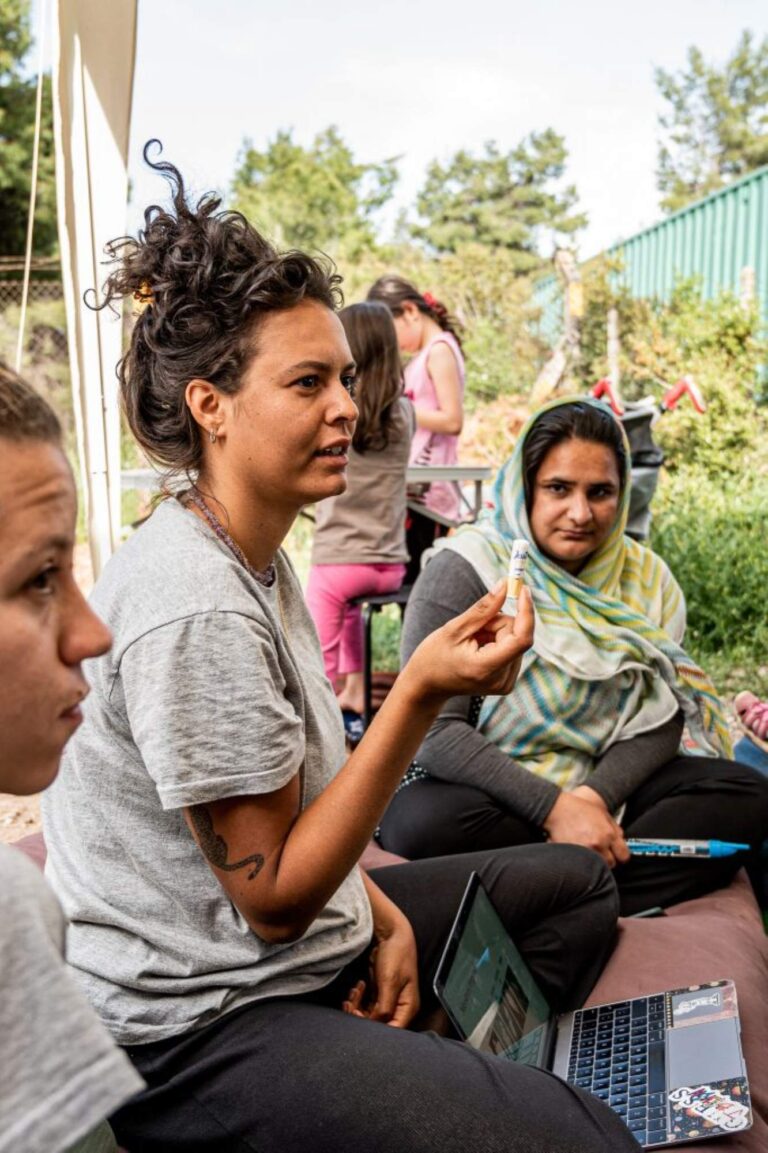
In Ritsona we were able to reach many new women from different countries of origin through a short-term offer of help from another NGO of ophthalmologists who parked near us. Regularly mainly the women who speak the language of our translator come. Currently, we always have either an Arabic or a Persian speaking translator on site.
-
With the knowledge of French in the ROSA team, we can also communicate with women from the Congo and have medical conversations. With the help of some women in the camp, we can also translate from English, to Arabic, to Kurdish and back, even if it sometimes feels like a long “silent post” round.
-
We are aware of the importance of language understanding; for the trust of women, but also the professionalism of the consultations and workshops in the Medi team. We hope to be able to maintain this diversity in the future and to expand it even better in order to be able to talk to as many women as possible.
-
Step by step, our presence on the ground is strengthening, but much remains to be done. Due to the constant need for hygiene products, menstrual products and contraceptives, our supplies are slowly emptying and we try to refill them again diligently through donations in kind. Through further public relations and the search for supporters, we hope to continue to meet the need for crew members as well as financial resources.
-
The days with the media and camera teams were also particularly exciting. The balance between the importance of public relations and preserving SafeSpace was challenging. The top priority is the well-being of women at ROSA Truck.
-
At the same time, we want to draw attention to the precarious situation and the need for aid projects. Here we try to focus as little as possible on ROSA, but mainly the women who want to speak.
-
In addition, we started as a group with supervised supervision by another NGO in order to be able to create mental relief through professional support of the crew. The impressions on site are associated with a certain psychological burden for the supporters. Although this is disproportionate to the situation of women, we would like to take special precautions here, as the health of the crew is also essential for a functioning project.
-
The first weeks and months were very dynamic and require constant evaluation, feedback and restructuring. The team here in Greece, as well as in Germany, is always facing new challenges, but also beautiful and unforgettable situations. We remain flexible and motivated.
-
We will see what the next few months bring and how ROSA can evolve during this time.
-
In order to build a long-term project and organize meaningful, sustainable support for women on the run, we still need your help!
Pressebilder zum Download
Die Bilder dürfen ausschließlich im Zusammenhang mit der Berichterstattung über das Thema dieser Pressemitteilung verwendet werden. Bitte die jeweils angegebene Bildquelle nennen.
-
Bildquelle: ROSA e. V.
Original herunterladen -
Bildquelle: ROSA e. V.
Original herunterladen -